
How XRHealth Reduced CAC From $3,000 to $600–800
Replacing a high-friction Calendly flow with forms, chatbot support, and continuous funnel testing reduced CPL by 93% and supported US market expansion.
Reimagining User Acquisition in Digital Health
XRHealth, a leader in the high-consideration health technology sector, faced a significant hurdle: their acquisition funnel was producing leads and customers at unsustainable costs. Despite steady traffic, the economics of their user journey prevented the brand from scaling effectively in the competitive US market.
Through a methodical 6-to-12-month period of experimentation and funnel restructuring, the team transformed their digital journey, moving from fragmented external tools to a seamless, high-conversion experience that fueled physical clinic expansion.
The Friction of Forced Commitment
The original user journey followed a rigid path: Ad to Landing Page to an external Calendly link. This process created several critical points of failure that inflated acquisition costs.
- Users were forced to leave the main website to book, resulting in a disconnected experience and lost context.
- Requiring an immediate time commitment before answering user questions created immense friction.
- Calendly no-show rates reached staggering levels of 50% to 70%, consuming sales capacity with low-intent bookings.
- A Cost Per Lead (CPL) of $150 and a Customer Acquisition Cost (CAC) of $3,000 made growth financially inviable.
"The problem was not the amount of traffic. It was what we asked users to do after the click."
A Staged Strategy for Funnel Optimization
The first step was embedding the scheduling tool directly onto the XRHealth domain to ensure a continuous brand journey and improved behavioral tracking.
The team replaced the primary booking requirement with a shorter lead form. This captured interest without demanding a high-consideration time commitment, allowing the sales team to facilitate scheduling during the follow-up.
Quiz-style funnels and chatbots were introduced to resolve user hesitations related to insurance and eligibility in real-time before they abandoned the page.
The team implemented continuous A/B testing across Facebook Lead Ads, landing page structures, and sales handoff paths to prioritize downstream customer quality over raw lead volume.
Product and Funnel Innovations
By asking questions progressively, the quiz structure made the experience interactive, collected valuable qualification data, and reduced the psychological pressure of static forms.
A custom chatbot handled common queries regarding pricing and technical requirements, with a logic-based escalation to live agents for high-intent prospects.
"The largest breakthrough came when we stopped forcing users to schedule immediately."
Transformational Economics and Market Expansion
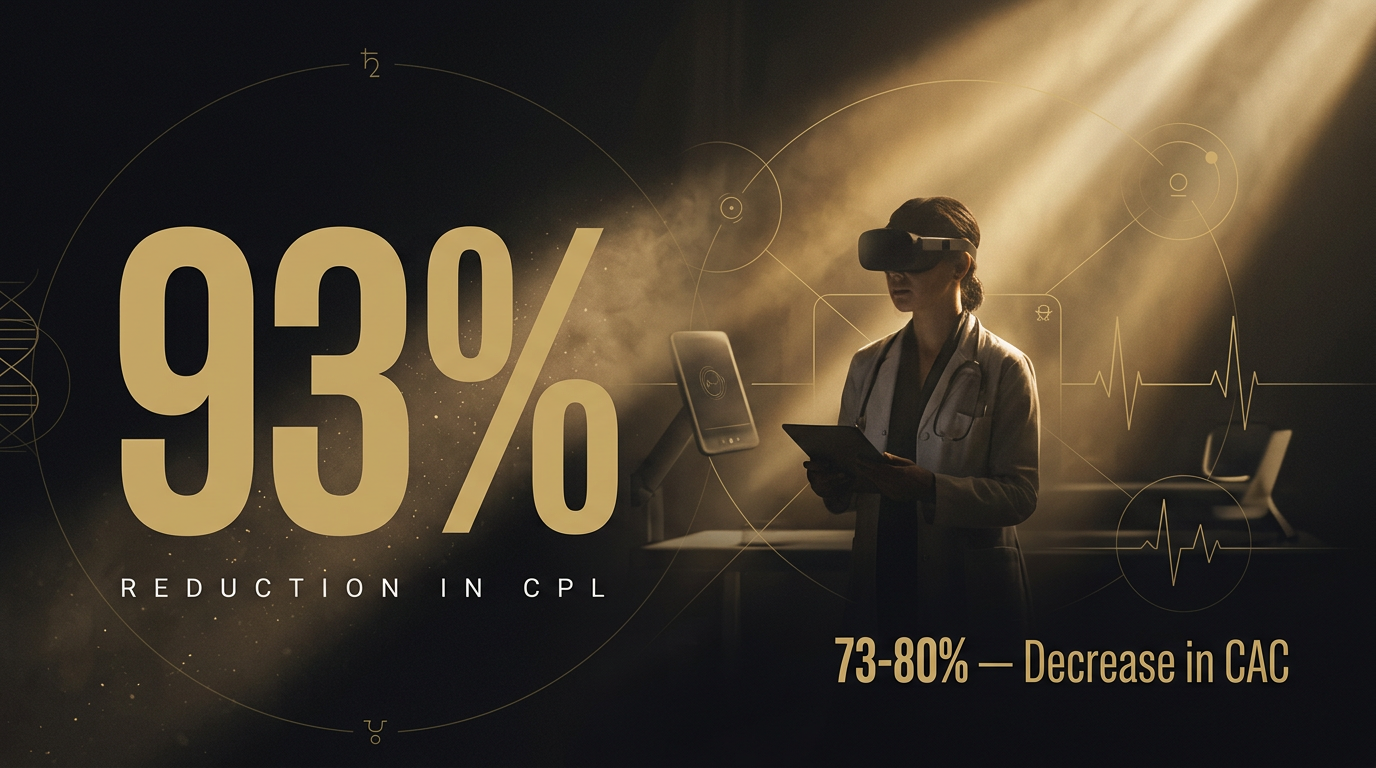
CPL plummeted from $150 to a highly profitable $10.
Customer Acquisition Cost fell from $3,000 to between $600 and $800, representing a 73-80% improvement in efficiency.
Removing the primary dependency on external self-service scheduling solved the 70% no-show problem and stabilized the sales pipeline.
Stronger unit economics enabled XRHealth to enter new US markets and provided the necessary financial foundation to open a new clinic in Florida.
From Cost Constraint to Growth Channel
The XRHealth case study proves that in high-consideration categories like healthcare, funnel logic is often more impactful than media spend. By identifying that a booked meeting was not the right first conversion, XRHealth unlocked a repeatable growth engine.
The result is a more predictable customer pipeline that not only satisfies investor requirements for unit economics but also directly supports the company's mission to expand physical care locations.