
The App Icon Is Not a Billboard
How Eyecon protected conversion and built an evidence-led ASO program across high-volume mobile markets.
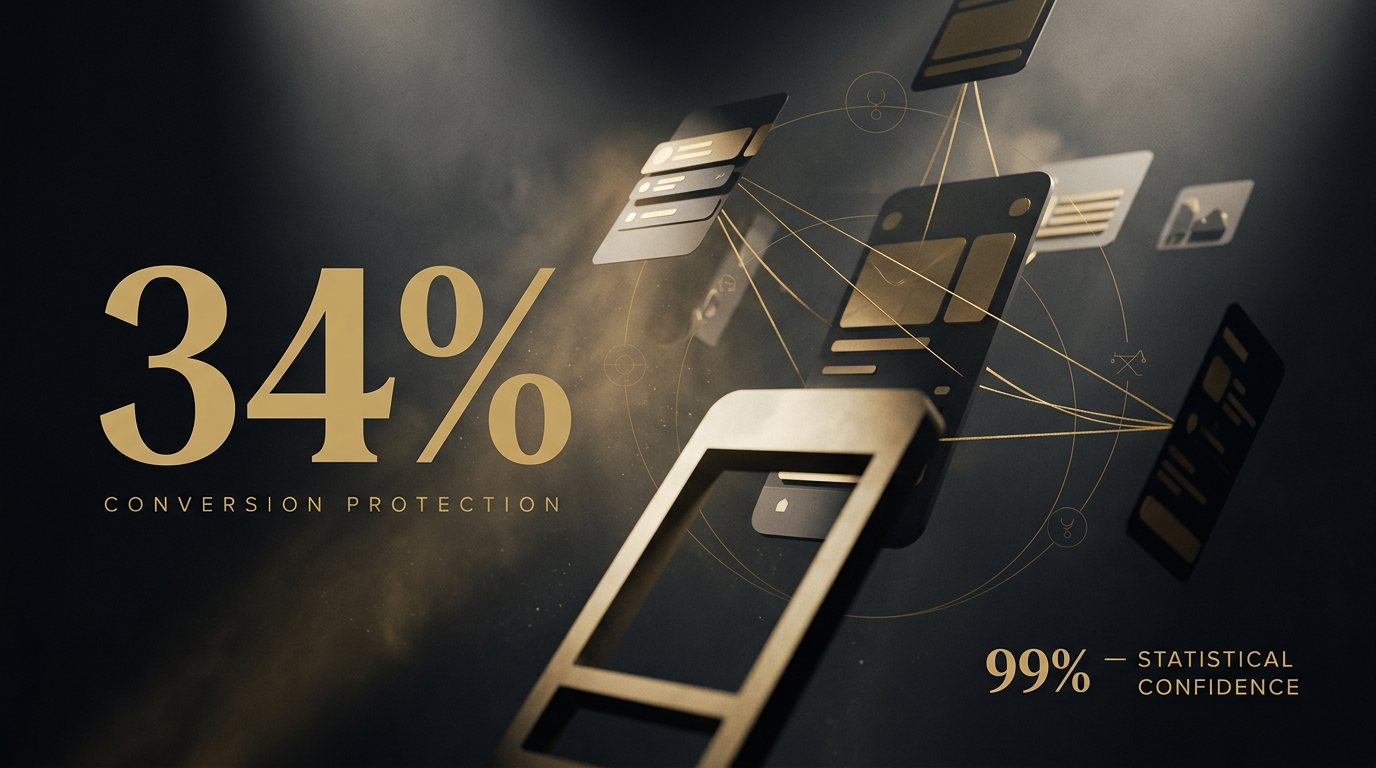
Evidence-Led ASO at Scale
Eyecon operates in high-volume mobile markets including Pakistan, India, and Bangladesh. The primary challenge was not a lack of creative ideas, but determining which ideas genuinely improved app store conversion versus those that only looked stronger internally.
The program introduced a structured Google Play experimentation framework to replace subjective creative discussions with measurable data centered on retained installer performance.
The Subjectivity Trap
Eyecon faced constant pressure to modify and localise creative assets based on a series of reasonable hypotheses: adding product features to icons, using culturally relevant imagery, or adopting the minimalist visual style of market leaders.
- Design clarity in presentations often fails to translate to small mobile screens
- Cultural references can inadvertently weaken brand trust if misapplied
- Competitor-inspired aesthetics don't automatically transfer category authority
- The objective was to protect high-volume listings from unproven changes
A Systematic Testing Framework
Developing specific conversion hypotheses based on market localization, competitor analysis, and feature messaging.
Building controlled creative variants to run against the existing listing baseline in a live environment.
Using scaled retained first-time installers as the primary success metric to ensure acquisition quality.
Implementing strict operational quality assurance to ensure all mock data in screenshots is intentionally fictional and safe.
Creative decisions must be based on retained installer performance, not internal preference, market stereotypes, or competitor aesthetics.
Defying Convention Through Data
Bold red icon variants in Pakistan significantly underperformed the original blue baseline.
"At Eyecon, we learned that the app icon is not a billboard. We tried making the icon explain more; users still preferred the clean baseline."
Experiments across Pakistan and India tested cricket-themed icons due to the sport's immense cultural relevance. Surprisingly, these variants failed to beat the existing listing, proving that cultural symbols can sometimes weaken visual clarity and brand recognition.
Strategic Gains and Risk Mitigation
The program successfully rejected color and text variants that would have reduced retained installs by double-digit percentages.
Proved through repeated testing that the existing blue icon carried significant brand recognition and user trust that newer designs lacked.
Improved localization workflows by adding data-safety and fictional-data checks to the screenshot production process.
"The competitor-inspired design looked better internally. It did not beat the baseline. Sometimes the less exciting creative is carrying more brand value than the team realises."
The Value of Disciplined Growth
The true impact of Eyecon's ASO program was not a single creative win, but the establishment of a disciplined mobile growth process. By treating every 'improvement' as a hypothesis, Eyecon avoided costly mistakes in high-volume markets.
A failed ASO test is a commercial win if it prevents a rollout that would have reduced conversion. High-confidence decisions at scale are preferred over subjective creative trends.